AI engineering for anything your business runs on.
Websites, web and mobile apps, portals, internal tools, APIs, data pipelines, AI agents, models that run on your own machines, and the hardware on the counter. We spec it, build it, run it, and hand you the keys.
30-minute callScoped before we buildYou own all of it
We reply within 2 business days.
You need this if
Every workaround is a spec.
Whatever you retype, chase or copy by hand is the brief. Here is what we would build instead.
Workaround 01By hand
The same information gets typed into two systems, by a person, every day.
We build
An integration that moves it once, the moment it lands.
Workaround 02By hand
You have bought AI software and it sits beside the business rather than inside it.
We build
An agent wired into the tools you already run, with a person signing off.
Workaround 03By hand
The spreadsheet three people edit at once is the system of record.
We build
An internal tool with one record, a login each, and a history of every change.
What it covers
If it runs your business, we build it.
From the page a customer reads to the printer on the counter, and everything wired between them.
Layer 1 of 4
What your customers see
Websites
The page a customer reads before deciding to get in touch. Design, build and copy.
Web apps and portals
Where customers book, pay, order and check on things without phoning you.
Mobile apps
iOS and Android, for the customers and the crew who are never at a desk.
Layer 2 of 4
What your team opens
Internal tools
The software that replaces the spreadsheet three people edit at once. Revenue management is one we have built.
CRM and dashboards
One record per customer, and the weekly numbers filled in without anyone pulling a report.
Layer 3 of 4
What runs underneath
APIs and integrations
Between the software you already pay for, so nothing gets typed twice.
Data pipelines
Your data pulled from every system, cleaned, and kept in one place for reports and for AI.
AI agents
They answer, qualify, draft and follow up, by text or voice, and hand a person the part that needs one.
Local models
AI that runs on your own machines, so private files never leave the building.
Layer 4 of 4
What sits on the counter
Hardware and devices
Kiosks, scales, label printers and sensors, wired into the same system as everything else.

Capabilities, not a list of past projects
Before the build: AI transformation →How it runs
Spec, prototype, build, run and hand over.
Every build runs these four. Here is one example, a quoting tool, going through them.
Stage 1 of 4
Spec
Written before any code: what it does, who uses it, what it replaces, and what done looks like. You sign it off.
You get: a written spec you sign off before any code
Quoting tool
Spec · v1
- Does
- Turns a job's line items into a quote
- Used by
- The owner and the estimators
- Replaces
- The quote spreadsheet
- Done when
- A quote goes out in one click
Signed off
go ahead
Stage 2 of 4
Prototype
A version you can click before anything is built for real. Changes are cheap here, so this is where we make them.
You get: a version you can click, while changes are cheap
Prototype · click it
total up top?Stage 3 of 4
Build
Built in small pieces you can see working, in accounts you own, and checked against the spec before it ships.
You get: working pieces in accounts you own, checked against the spec
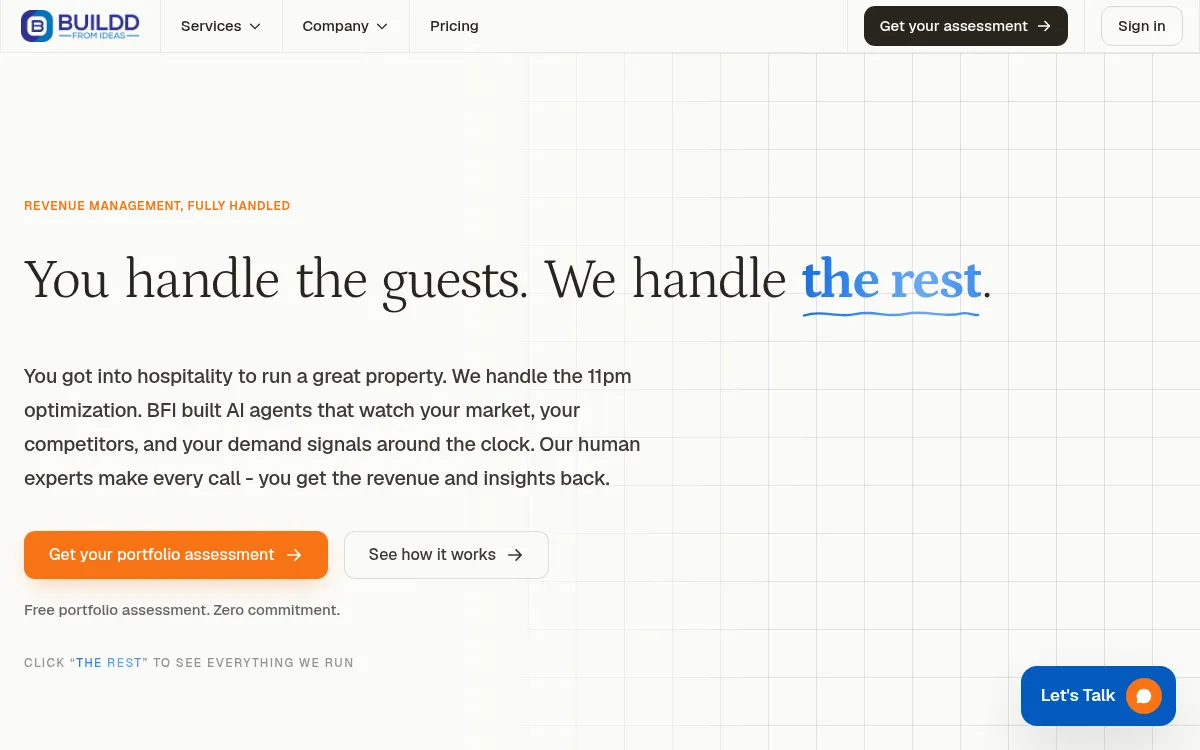
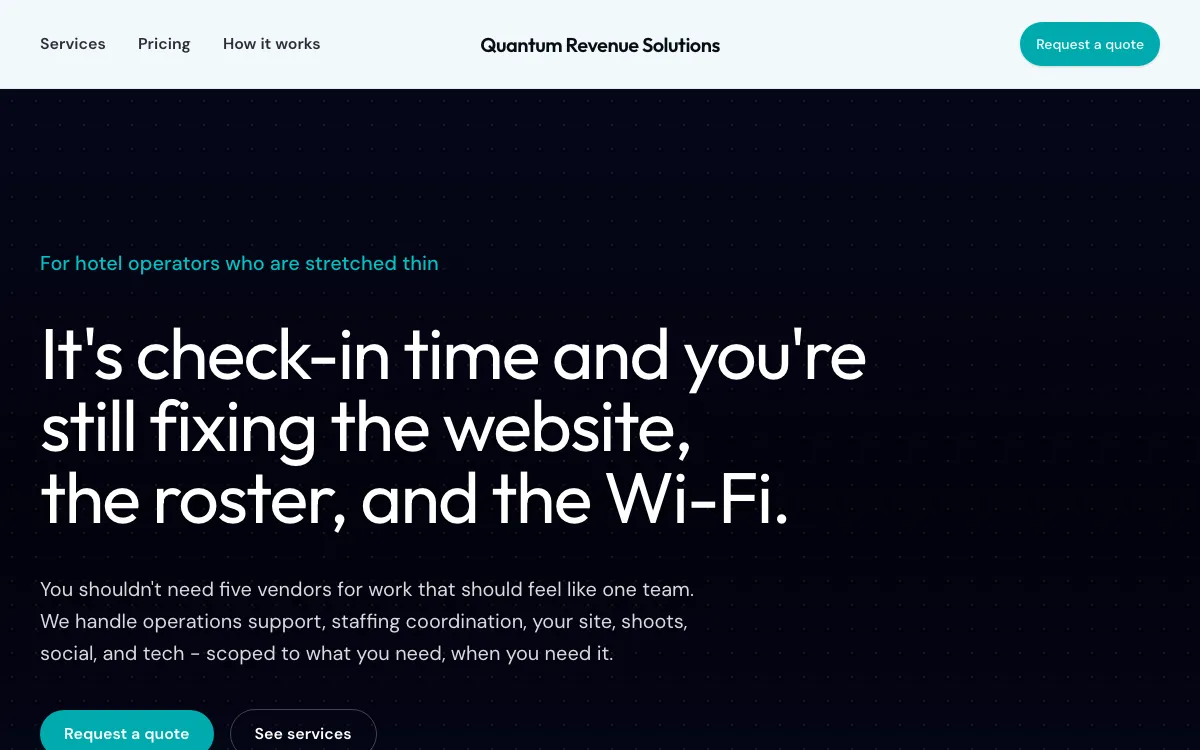
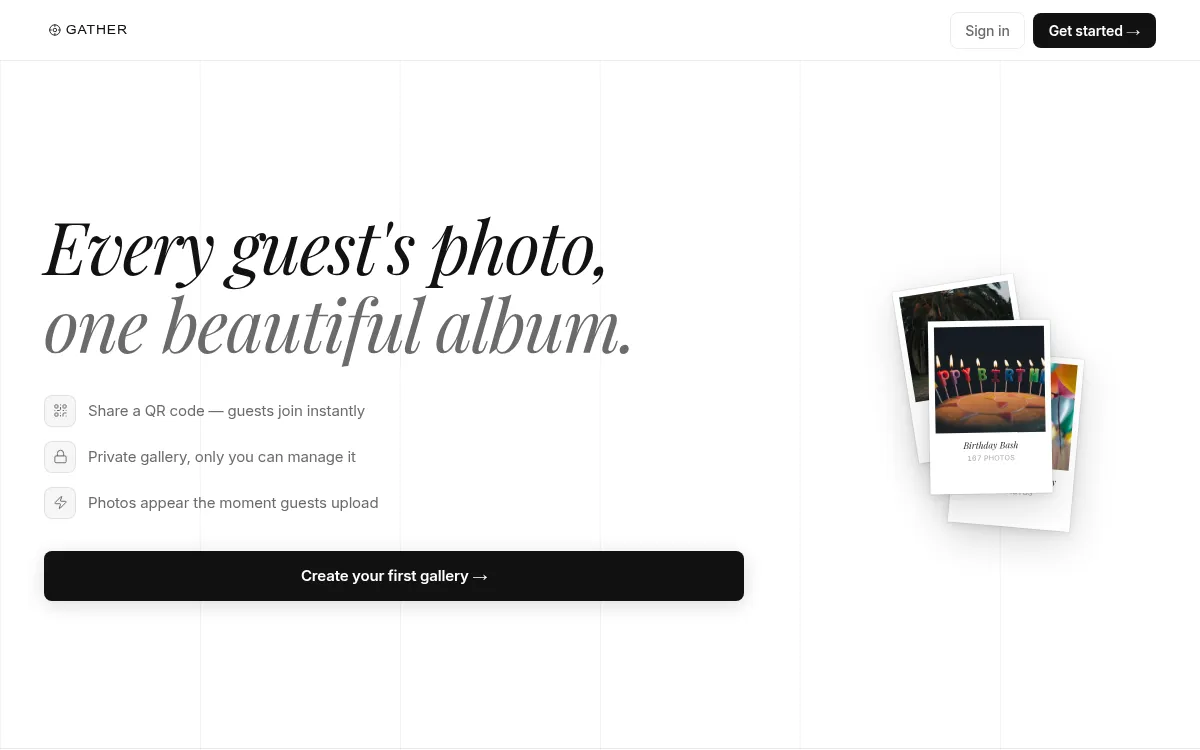
Where this ran: Lazy Bear Lodge, BuildFromIdeas, Quantum Revenue Solutions
BuildingReadyQuote Q-0142
Harbour Street job
Labour6 hMaterials14 itemsCall-out1- checks pass against the spec
- live in your account
Stage 4 of 4
Run and hand over
We run it live, fix what real use turns up, train your team, and hand over the code, the accounts and the docs.
You get: the code, the accounts and the docs, and your team trained
Handover
Live
- The codeYours
- The accountsYours
- The docsYours
- Your team, trainedYours
Example
A quoting tool, drawn for this page, not a client’s
Shipped, and live today.
Real sites with public URLs, and the part of each that we built.

Questions about the build.
What do you build?
Anything your business runs on: websites, web and mobile apps, portals, internal tools, dashboards, integrations, data pipelines, AI agents, local models and the hardware around them. Each build is specced and signed off before it starts, so you always know what is being made and what it replaces.
Can you build on the software we already pay for?
Yes, and most builds do. Integrations connect the tools you run so information stops being retyped between them, and an internal tool or an agent sits beside them rather than replacing them. Something new gets built when nothing you have can do the job.
What happens after something goes live?
You have a standing point of contact, while something is being built and after it goes live. Training is part of the work rather than a document handed over at the end of it, because the point of the engagement is a team that runs the systems without us.
Who owns what you build?
You do. It runs in accounts you own, your team is trained to run it, and nothing about it depends on us staying in the building. That is what a build is for.
Start with an intro call
Thirty minutes on what you run, what is eating the most time, and whether we are the right people for it. We reply within 2 business days.
Or write to hey@vetted.tools, or take the assessment first.